Article
Mar 11, 2025

Discover how welding simulators improve welding skills, enhance safety, reduce training costs, and transform industrial training with immersive VR technology.
Introduction
The manufacturing industry is evolving rapidly, and so are the methods used to train skilled welders. Traditional welding training often involves high material costs, safety risks, equipment wear, and significant instructor supervision. As industries strive to improve training efficiency while maintaining quality and safety, welding simulatoemergedrs have as a modern solution.
A VR Welding Simulator enables trainees to practice welding techniques in a realistic virtual environment without consuming materials or exposing themselves to hazardous conditions. By combining immersive Virtual Reality (VR), real-time feedback, and performance analytics, welding simulators help learners develop practical skills faster while reducing training costs.
Whether you're a manufacturing company, technical institute, vocational training center, or industrial organization, investing in a welding simulator can improve training quality, enhance workforce readiness, and standardize skill development.
What Is a Welding Simulator?
A Welding Simulator is a training system that recreates real-world welding scenarios using Virtual Reality technology. Instead of practicing on actual metal workpieces, trainees wear a VR headset and use a simulated welding torch to perform welding tasks in a safe, immersive environment.
The simulator evaluates important welding parameters such as torch angle, travel speed, arc length, work angle, and weld consistency. After each session, trainees receive instant feedback that helps them identify mistakes and improve their technique before transitioning to live welding.
Why Are Welding Simulators Important?
Welding simulators play a vital role in modern workforce training by providing a safe, cost-effective, and efficient way to develop welding skills. Unlike traditional training, they allow trainees to practice in a realistic virtual environment without consuming materials or exposing themselves to safety risks. Organizations benefit from reduced training costs, standardized learning, real-time performance feedback, and faster skill development, making welding simulators an essential tool for industries and educational institutions.
How Does a VR Welding Simulator Work?
A VR welding simulator combines advanced hardware and intelligent software to create an interactive learning experience.
The training process typically includes:
Wear a VR headset.
Select a welding process and training module.
Practice welding using a simulated torch.
Perform different joint configurations and welding positions.
Receive instant performance analysis.
Repeat exercises until the desired skill level is achieved.
This structured approach allows trainees to build confidence while reducing dependence on physical consumables and instructor intervention.
Key Benefits of Welding Simulators
01. Improve Safety
New welders can practice in a completely safe environment without exposure to heat, sparks, smoke, or harmful fumes.
02. Reduce Training Costs
Virtual welding eliminates the need for repeated use of electrodes, filler materials, shielding gas, and metal plates during the early stages of training.
03. Faster Skill Development
Real-time feedback helps learners quickly understand mistakes and improve their welding techniques.
04. Standardized Training
Every trainee follows the same curriculum and evaluation criteria, ensuring consistent learning outcomes across multiple locations.
05. Performance Analytics
Modern welding simulators generate detailed reports that help instructors monitor progress, identify skill gaps, and personalize training.
06. Unlimited Practice
Learners can repeat exercises as many times as needed without additional material costs.
Types of Welding Simulators
01. Virtual Reality (VR) Welding Simulator
A VR welding simulator provides a fully immersive training experience using a VR headset and simulated welding tools. It allows trainees to practice welding techniques in a realistic, safe, and controlled virtual environment.
02. Augmented Reality (AR) Welding Simulator
An AR welding simulator overlays digital instructions and guidance onto the real world, helping trainees improve accuracy while interacting with physical equipment.
03. Mixed Reality (MR) Welding Simulator
MR welding simulators combine virtual and physical elements, enabling users to interact with both digital content and real-world objects for a more advanced training experience.
04. Desktop Welding Simulator
A desktop welding simulator is a computer-based training solution that helps beginners learn welding concepts, techniques, and procedures without requiring VR or specialized hardware. It is ideal for introductory training and theoretical learning.
Welding Processes Supported
Many professional welding simulators support multiple welding techniques, including:
MIG (Gas Metal Arc Welding)
TIG (Gas Tungsten Arc Welding)
Stick Welding (SMAW)
Flux-Cored Arc Welding (FCAW)
Fillet Welds
Butt Welds
Lap Joints
Horizontal, Vertical, and Overhead Welding
This allows organizations to train employees for different industrial requirements using a single platform
Benefits of Using a Welding Simulator
Improve Safety
Trainees can practice welding techniques in a risk-free virtual environment without exposure to heat, sparks, or harmful fumes.
Reduce Training Costs
Virtual training minimizes the use of welding materials, consumables, and equipment, helping organizations lower overall training expenses.
Accelerate Skill Development
Real-time feedback allows learners to identify mistakes, improve techniques, and build confidence through repeated practice.
Standardize Training
Every trainee follows the same training modules and evaluation criteria, ensuring consistent learning outcomes across teams.
Real-Time Performance Feedback
The simulator analyzes key welding parameters such as torch angle, travel speed, and arc length, providing detailed performance reports for continuous improvement.
Unlimited Practice Opportunities
Trainees can repeat welding exercises as many times as needed without additional material costs, leading to better skill retention and faster learning.
Industries That Use Welding Simulators
Manufacturing
Manufacturers use welding simulators to onboard new employees, improve productivity, and maintain consistent welding quality.
Automotive
Automotive companies train technicians on complex welding procedures while minimizing production downtime.
Oil & Gas
The oil and gas industry uses welding simulators to prepare workers for high-precision welding tasks in safety-critical environments.
Aerospace
Aerospace organizations require highly accurate welding techniques, making VR-based training valuable for skill development.
Shipbuilding
Large-scale fabrication projects benefit from standardized welding practices that reduce errors and improve quality.
Educational Institutions
Technical colleges, ITIs, and vocational training centers use welding simulators to provide hands-on learning without excessive material costs.
Welding Simulators for Educational Institutions
ITIs (Industrial Training Institutes)
Provide students with hands-on welding practice in a safe, virtual environment while reducing the cost of consumables and equipment maintenance.
Engineering Colleges
Enhance practical learning by allowing students to develop welding skills before working with real welding equipment.
Universities
Support advanced welding education and research through immersive, technology-driven training programs.
Vocational Training Centers
Deliver standardized, industry-relevant welding training that helps learners build confidence and improve job readiness.
Why VR Welding Training Is the Future
As industries adopt digital transformation, training methods are becoming more data-driven and efficient. VR welding simulators provide measurable performance insights, allowing organizations to track learner progress, improve training outcomes, and reduce operational costs.
The combination of immersive technology, AI-assisted feedback, and repeatable practice makes VR welding training an essential tool for developing skilled welders.
How to Choose the Right Welding Simulator
When selecting a welding simulator, consider the following factors:
Supported welding processes
Realistic VR experience
Performance analytics
Ease of use
Instructor dashboard
Reporting capabilities
Expandability
Technical support
Industry-specific training modules
Return on investment
Choosing a simulator that aligns with your organization's training goals ensures long-term value.
Why Choose Simulanis Welding Simulator?
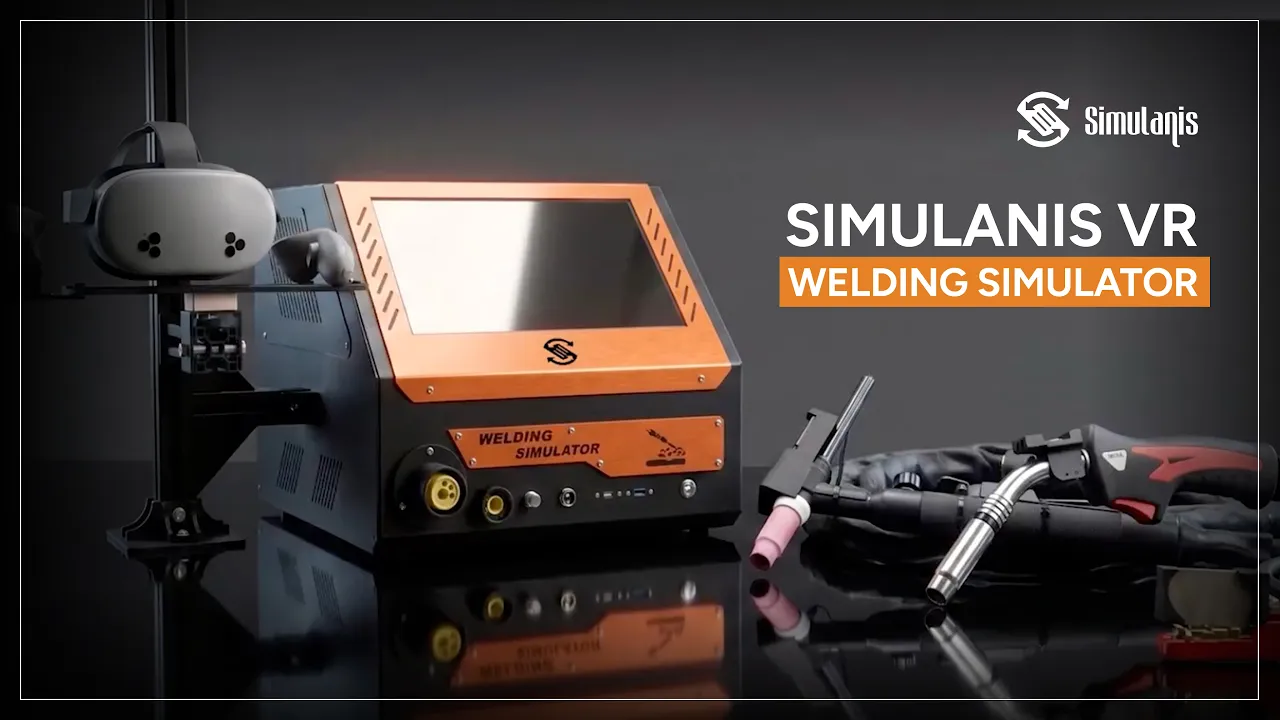
The Simulanis VR Welding Simulator is designed to help organizations modernize welding training through immersive Virtual Reality technology. It enables learners to practice essential welding skills in a safe, controlled environment while providing instructors with detailed performance insights.
With realistic simulations, interactive learning modules, and measurable training outcomes, Simulanis supports industries, educational institutions, and training centers in building a skilled and confident workforce.
Conclusion
Welding simulators are transforming industrial training by combining immersive Virtual Reality with real-time performance analytics. They enable organizations to improve safety, reduce training costs, standardize learning, and develop skilled welders more efficiently than traditional methods alone.
As industries continue to embrace digital technologies, VR welding simulators will play an increasingly important role in workforce development and technical education.
If your organization is looking to modernize welding training, improve skill development, and achieve measurable training outcomes, a Simulanis Welding Simulator offers a practical and scalable solution.
Request a Demo.
Ready to Transform Your Welding Training?Ready to modernize your welding training? Discover how the Simulanis Welding Simulator can help your organization improve safety, reduce training costs, and accelerate skill development with immersive VR technology.
Request a personalized demo today to experience realistic welding simulations, real-time performance analytics, and industry-ready training solutions tailored to your organization's needs.